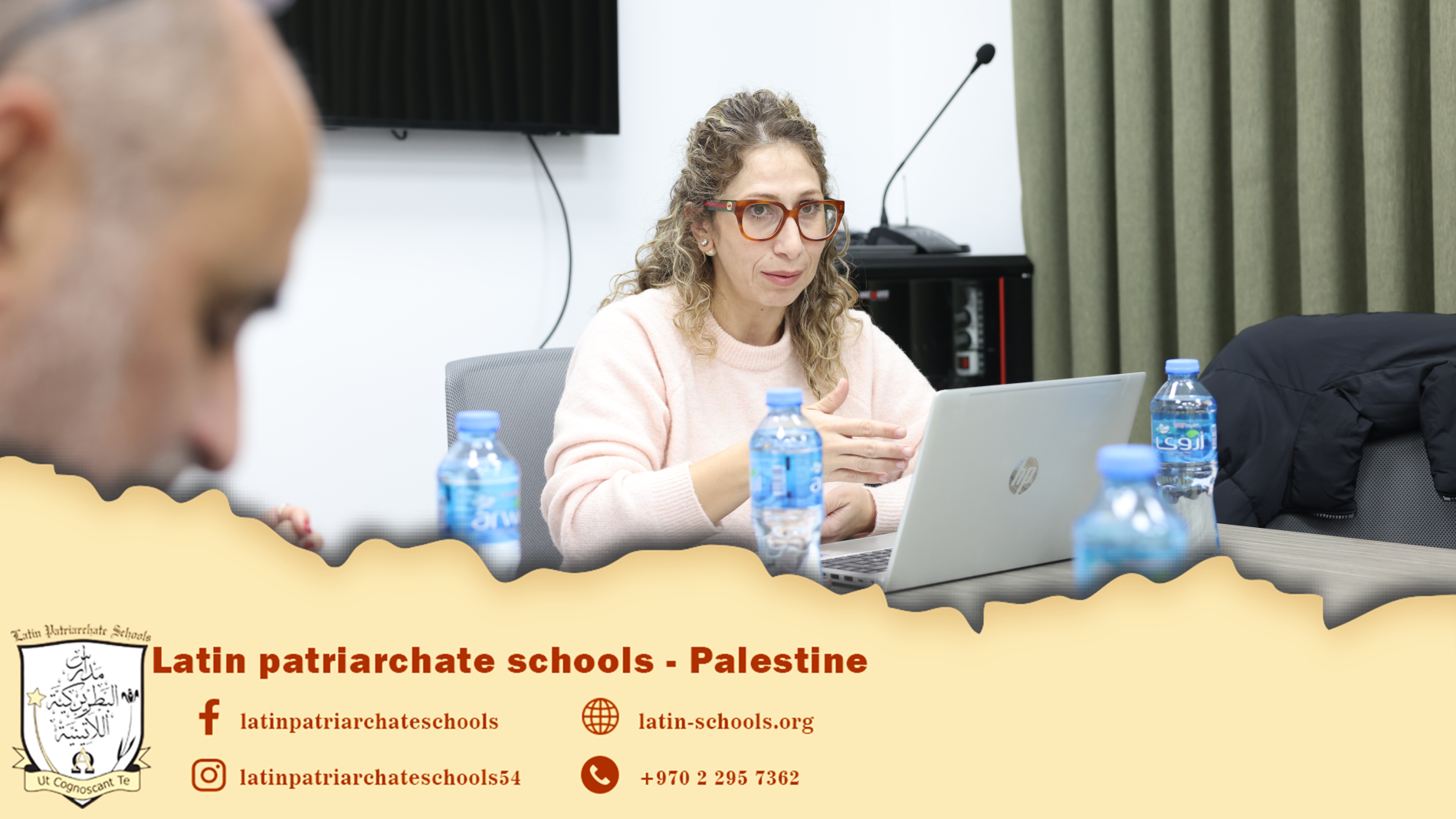
As part of the partnership with the Finnish Church Aid (FCA), a meeting was organized between the General Administration of the Latin Patriarchate Schools and the principals of the schools participating in the Inclusive Education Program. The meeting also included institutions collaborating with the schools, namely: QADER for Community Development, represented by Ms. Dima Jaqaman; the Palestinian Counseling Center, represented by Ms. Sareen Al-Ilm; and the Palestinian expert in learning difficulties and educational disabilities, Ms. Kafaya Baydoon.
The meeting began with the General Director , Fr. Dr. Yacoub Rafidi, extending his gratitude to the attendees and appreciating the efforts being made to empower teachers to effectively address diversity within classrooms. He emphasized that these efforts contribute to improve the quality of education provided to students, who are the core focus of the teaching and learning process.
Program Coordinator Ms. Nadine Nashashibi highlighted on the importance of the meeting in clarifying the future plans for these ongoing efforts, which aim to develop educational practices implemented in classrooms. These efforts ultimately seek to achieve the primary goal of raising teachers' awareness about distinguishing between learning difficulties, disabilities, and slow learning, and addressing students’ needs accordingly.
The partnering institutions presented their action plans and outlined the goals they had set. They stressed on the importance of adopting such programs in schools, which benefit students by offering tailored strategies and simple accommodations that can significantly ease their learning journey and prevent unnecessary challenges.
School principals commended the program, noting that it will undoubtedly increase teachers' awareness and, consequently, improve student performance. They also discussed the challenges they face, whether with teachers or with parents.
At the conclusion of the meeting, participants recommended expanding the target group of teachers to include grades 5 to 9. They also emphasized the importance of relying on trusted centers to diagnose cases and implement accommodations tailored to each student's specific needs.